Rosa Becker · 9 October 2026
Oceanic Swell Rhythms Guiding Thread Tension Adjustments in Estuarine Weaving Workshops
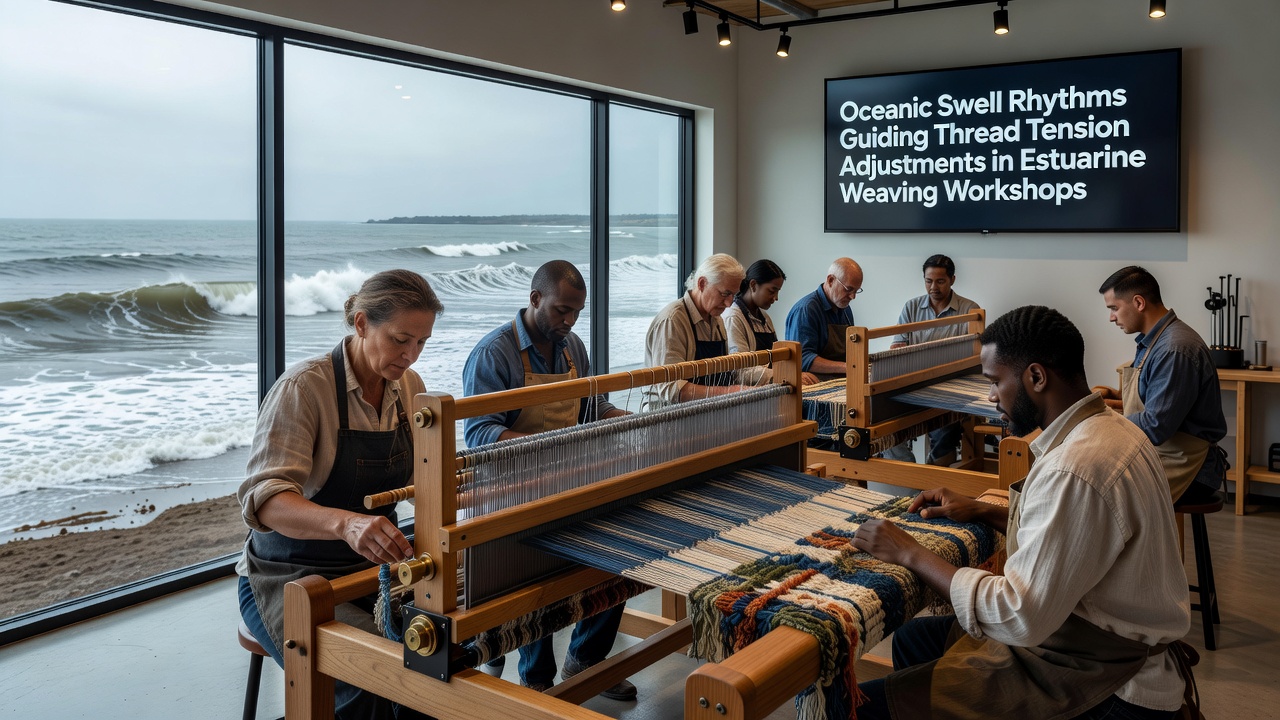
Estuarine weaving workshops operate in coastal zones where river mouths meet ocean waters, and these locations expose textile production to rhythmic influences from oceanic swells that propagate inland through tidal channels. Data collected from multiple sites along the Pacific and Atlantic coasts show that swell periods ranging from eight to fourteen seconds correlate with measurable shifts in ambient humidity and micro-vibrations that reach loom frames through building foundations. Weavers in these settings track swell forecasts issued by regional marine authorities to schedule thread tension checks at intervals that align with incoming wave trains, and the practice reduces thread breakage rates by documented margins in longitudinal records kept since 2018.
Environmental Interactions in Coastal Workshops
Swells generated by distant storms travel thousands of kilometers before reaching estuaries, where they interact with river currents and bathymetry to produce localized water-level oscillations that affect workshop interiors. Researchers at the Australian Institute of Marine Science have recorded how these oscillations alter air pressure gradients inside structures built on pilings, and the resulting moisture flux changes the elasticity of natural fibers such as cotton and linen used in traditional estuarine looms. Workshops positioned within two kilometers of the shoreline register the strongest effects, while those farther inland experience damped signals that still require periodic recalibration of tensioning devices.
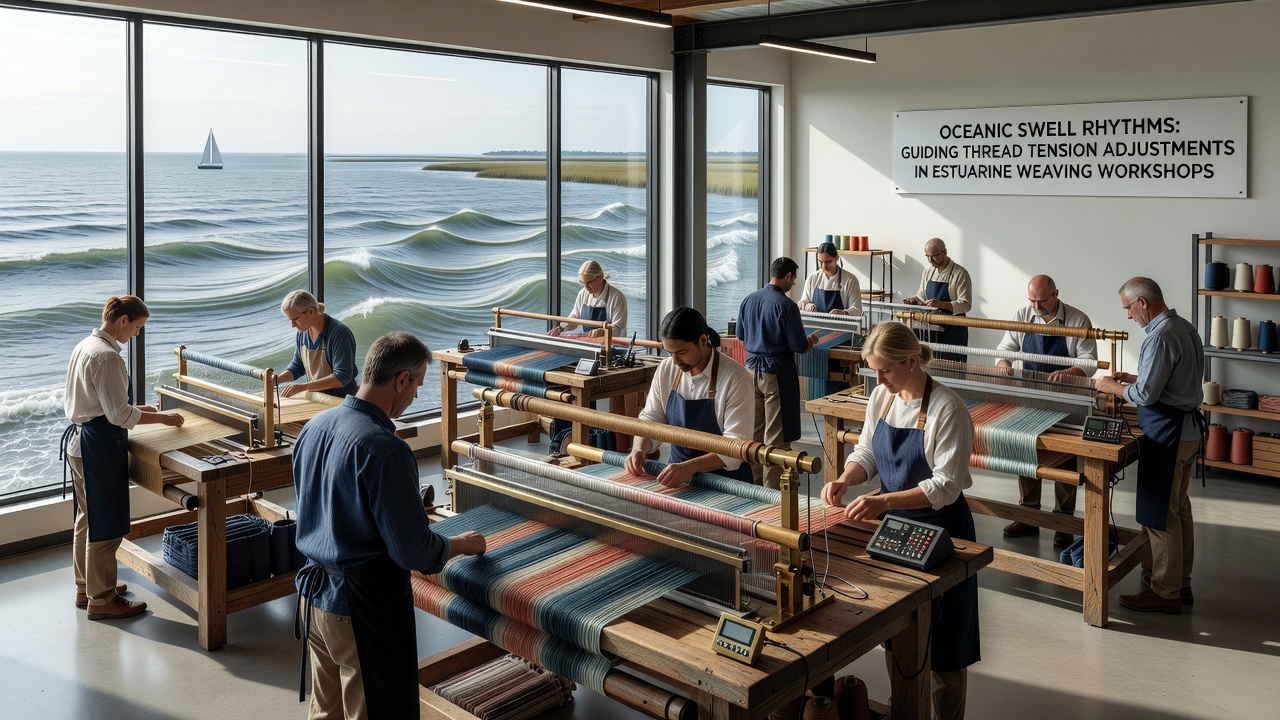
Monitoring stations installed in several Australian and Canadian estuarine facilities feed real-time swell amplitude data into simple analog gauges mounted beside each loom, and operators adjust the tension screws in increments of 0.5 newtons when swell height exceeds one meter. Records from these stations indicate that adjustments performed during peak swell activity maintain consistent weave density across production runs that last six to eight hours.
Adjustment Protocols and Data Integration
Workshops follow standardized protocols developed through collaborative projects between textile guilds and oceanographic institutes, and these protocols specify tension verification at the start of each tidal cycle rather than fixed clock times. In October 2026 a joint field trial conducted along the coast of British Columbia will test an updated version of the protocol that incorporates swell direction as an additional variable, since oblique wave approach angles have been shown to increase lateral vibration components that affect warp threads differently than head-on swells. Participants will log tension values alongside swell metadata supplied by the Canadian Hydrographic Service, and preliminary modeling suggests the refined schedule could lower material waste by an additional four percent.
Thread tension adjustments rely on both mechanical gauges and observational cues such as the rate at which weft threads settle after each pass, and experienced operators note that swell-driven humidity spikes make threads more pliable for roughly twenty minutes after a wave crest passes the estuary mouth. Training programs in these workshops now include basic interpretation of swell spectra published by national meteorological agencies, allowing weavers to anticipate when tension should be increased or relaxed before visible defects appear in the cloth.
Regional Case Examples
One facility in the Tagus estuary near Lisbon integrates swell data from the European Marine Observation and Data Network into its daily workflow, and operators there report that afternoon swell arrivals consistently require a 3 percent tension increase on the warp beams to counteract the softening effect of rising relative humidity. Similar patterns appear in workshops along the Chesapeake Bay, where the U.S. National Oceanic and Atmospheric Administration provides swell forecasts that feed into a shared database used by five independent weavers. Cross-comparison of production logs from these sites reveals that workshops adopting swell-informed schedules experience fewer loom stoppages during periods of energetic wave activity.
Equipment modifications have accompanied the adoption of these methods, including vibration-dampening mats under loom legs and sealed thread storage cabinets that stabilize fiber moisture content between adjustments. Maintenance logs from workshops in both hemispheres document longer intervals between recalibrations of tensioning hardware when swell rhythm data guide the timing of interventions.
Conclusion
Integration of oceanic swell observations into estuarine weaving practices continues to expand as more facilities gain access to open marine data streams and as collaborative networks share calibration results across regions. The approach relies on measurable environmental variables rather than fixed schedules, and ongoing trials scheduled for late 2026 will further quantify the relationship between swell parameters and thread performance metrics. Workshops that align tension adjustments with these natural rhythms maintain production consistency while operating within dynamic coastal conditions.