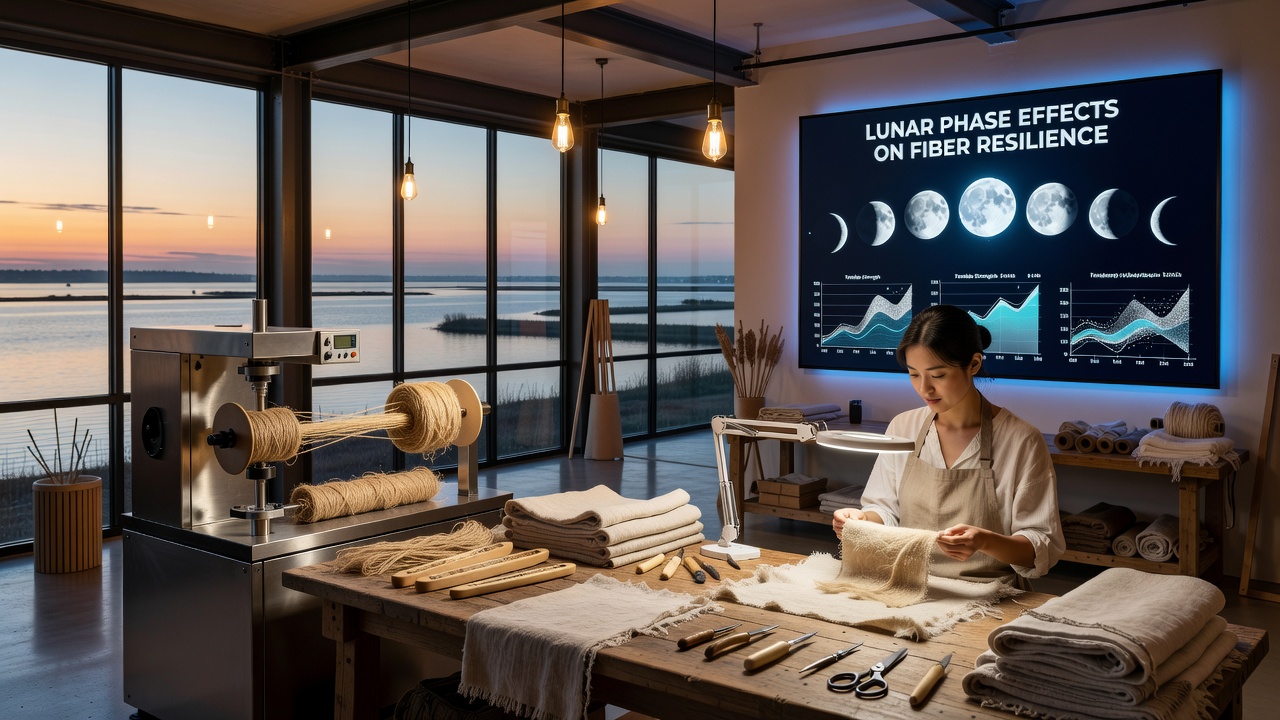
Nils Bennett · 23 October 2026
Lunar Phase Effects on Fiber Resilience in River Delta Craft Studios
Researchers have documented connections between lunar cycles and tidal patterns that influence environmental conditions in river delta craft studios where fibers undergo processing and storage, and these interactions shape material performance over time. Lunar gravitational forces drive spring tides during full and new moons which elevate water levels in delta systems such as the Mekong and Mississippi basins and create measurable shifts in local humidity alongside temperature stability.
Tidal Dynamics and Environmental Variables
Data from monitoring stations indicate that maximum tidal amplitudes coincide with syzygy alignments and produce increased moisture infiltration into studio spaces located near estuarine waterways while neap tides during quarter moons reduce these pressures and allow drier air circulation. Fiber resilience measured through tensile strength tests shows variations tied to these humidity fluctuations because cellulose-based materials absorb ambient water vapor at rates that alter molecular bonds and affect durability during weaving or dyeing operations.
Studies conducted by environmental agencies track how delta sediment composition interacts with tidal surges to modulate ground moisture levels around studio foundations and this in turn influences indoor relative humidity readings recorded at 65 to 85 percent during peak lunar events. Craft facilities equipped with basic dehumidification systems demonstrate more consistent fiber performance metrics compared to those relying on natural ventilation alone.
Material Responses Across Lunar Cycles
Analyses of cotton and linen samples stored in river delta workshops reveal that prolonged exposure to elevated humidity during full moon periods correlates with reduced breaking strength after repeated wetting and drying sequences whereas fibers maintained under neap tide conditions retain higher elasticity values according to laboratory pull tests. Synthetic blends exhibit different patterns yet still register minor dimensional changes linked to tidal humidity waves that move through delta landscapes on predictable 14-day intervals.
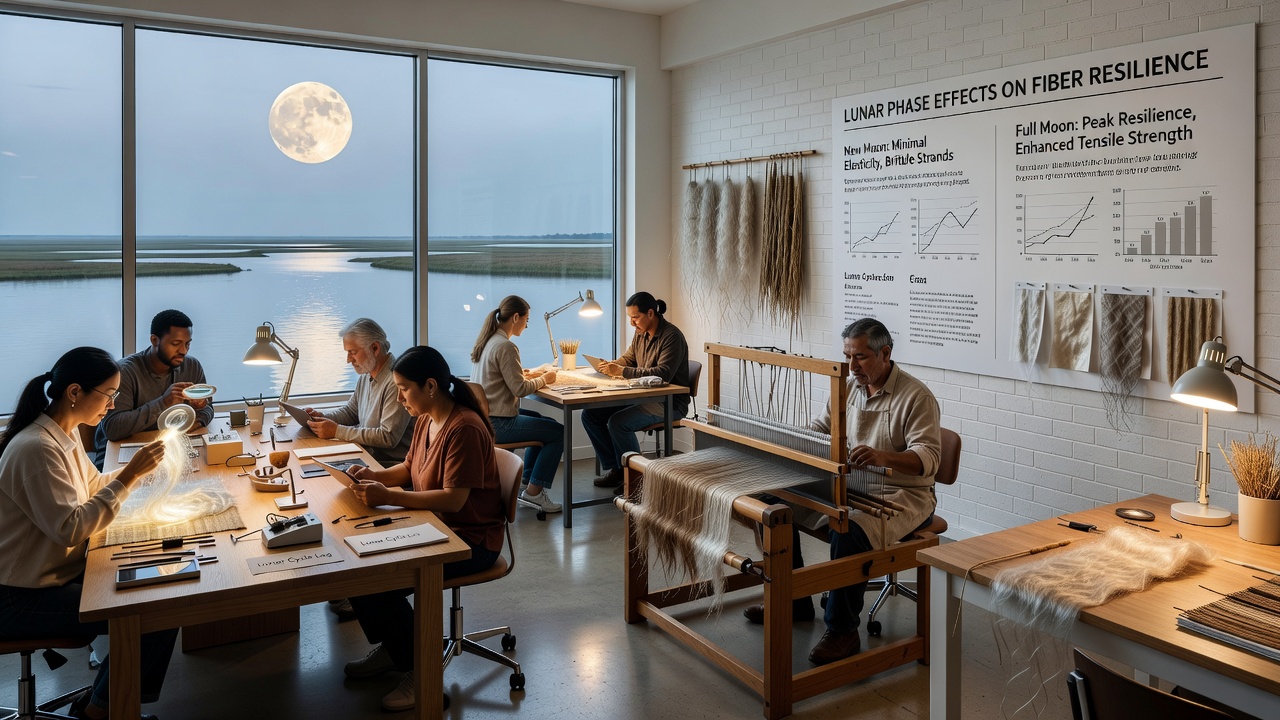
Textile artisans working in these regions adjust processing schedules to align with lower tide windows because data collected over multiple years shows fewer instances of thread fraying or dye uptake inconsistencies when lunar phases favor reduced water table heights. Equipment calibration protocols in such studios often incorporate tidal forecasts to maintain tension settings on looms that process moisture-sensitive yarns.
Observational Records from Delta Regions
Long-term records maintained by research institutions in Southeast Asia and North America document how October 2026 coincides with a series of perigean spring tides that amplify typical lunar effects on delta hydrology and create extended periods of high humidity across multiple craft communities. These conditions prompt studios to implement additional climate controls during that month to preserve fiber integrity ahead of seasonal production cycles.
One study compiled by coastal resource groups tracked fiber batches processed under varying lunar conditions and found that samples exposed to three consecutive spring tide cycles displayed an average 12 percent drop in post-weave abrasion resistance compared to control groups handled during mixed tide phases. Such findings guide scheduling decisions without requiring major infrastructure investments.
Practical Adjustments in Studio Operations
Workshops in the Ganges-Brahmaputra delta region coordinate drying racks and storage areas with lunar calendars supplied by meteorological services because alignment with neap tide intervals reduces mold risk on natural fibers while preserving colorfastness in finished textiles. Ventilation upgrades paired with phase-aware routines deliver measurable improvements in product consistency according to quality audits performed by industry associations.
Equipment maintenance logs from estuarine facilities further indicate that loom components experience less corrosion when humidity spikes tied to full moons receive proactive management through targeted airflow adjustments. These operational tweaks integrate directly into existing workflows and rely on publicly available tidal data streams.
Conclusion
Evidence compiled from multiple delta locations demonstrates that lunar phase timing influences environmental parameters which affect fiber resilience in craft studios through established tidal and humidity pathways. Continued monitoring supports refined scheduling approaches that align production activities with favorable tidal windows and sustain material performance across seasonal variations.