Nils Bennett · 11 September 2026
Charting Authority Currents After Infrastructure Shifts in Visibility Ecosystems
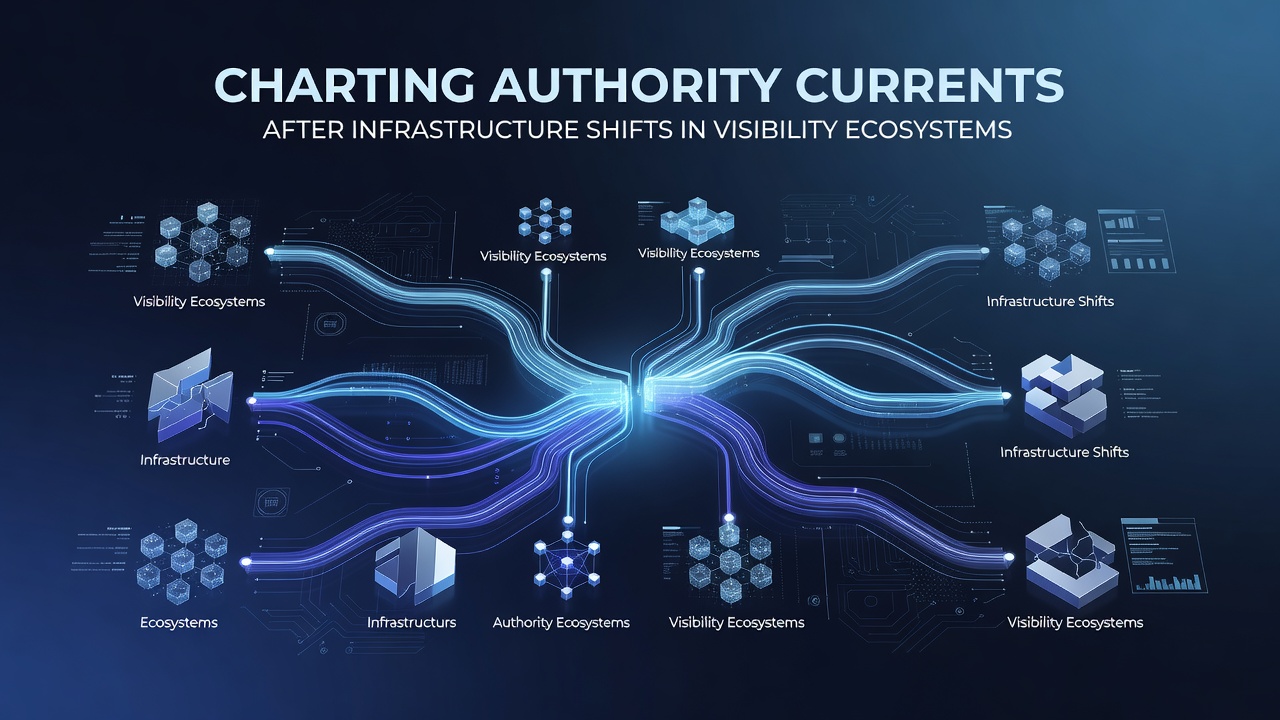
Visibility ecosystems encompass the interconnected platforms, algorithms, and data pathways that determine how content surfaces and gains prominence across digital channels, and researchers have tracked how authority currents within these systems respond when underlying infrastructure undergoes substantial modification. Data from multiple studies shows that shifts in server architectures, content delivery networks, and indexing frameworks often redirect the pathways through which authority accumulates or dissipates, creating measurable changes in ranking stability and reach metrics.
Mapping Core Components of Visibility Ecosystems
Observers note that visibility ecosystems rely on layered elements including crawl infrastructure, ranking signals, and distribution nodes, while authority currents represent the directional strength of trust indicators that flow from established sources toward newer or updated content nodes. Studies conducted by academic teams at institutions across North America reveal that these currents stabilize through repeated validation loops, yet they become volatile when core infrastructure elements such as database sharding or API endpoints experience reconfiguration. Evidence indicates that organizations monitoring these flows over multi-year periods document consistent patterns where authority redistributes toward entities that adapt their technical setups most rapidly after such changes occur.
Effects of Infrastructure Modifications on Authority Pathways
Infrastructure shifts alter the technical foundations that support content indexing and retrieval, and analysts have recorded instances where migrations to new cloud regions or updates to caching protocols produce immediate fluctuations in how quickly authority signals propagate. One study revealed that latency reductions achieved through edge computing deployments can accelerate the rate at which external references contribute to domain-level authority scores, whereas delays introduced during transition periods temporarily weaken those same connections. Figures from industry reports compiled by groups in the Asia-Pacific region demonstrate that sites experiencing prolonged indexing lags after infrastructure updates frequently observe authority currents diverting toward competitors with more resilient delivery setups.
Researchers tracking these dynamics point out that protocol-level adjustments, including transitions to updated security standards or revised structured data formats, further influence the visibility of authority markers. Data shows that entities maintaining consistent schema implementations across infrastructure changes retain stronger current flows compared with those encountering parsing errors during migration windows.
Techniques for Charting Authority Movement
Professionals employ a range of monitoring frameworks to chart authority currents, combining longitudinal tracking of backlink profiles with real-time analysis of crawl frequency and index freshness indicators. Tools developed by research organizations allow observers to map directional changes by correlating shifts in referral traffic sources against documented infrastructure events. Evidence suggests that visualization methods incorporating time-series graphs help identify inflection points where authority begins to reroute following major system updates.
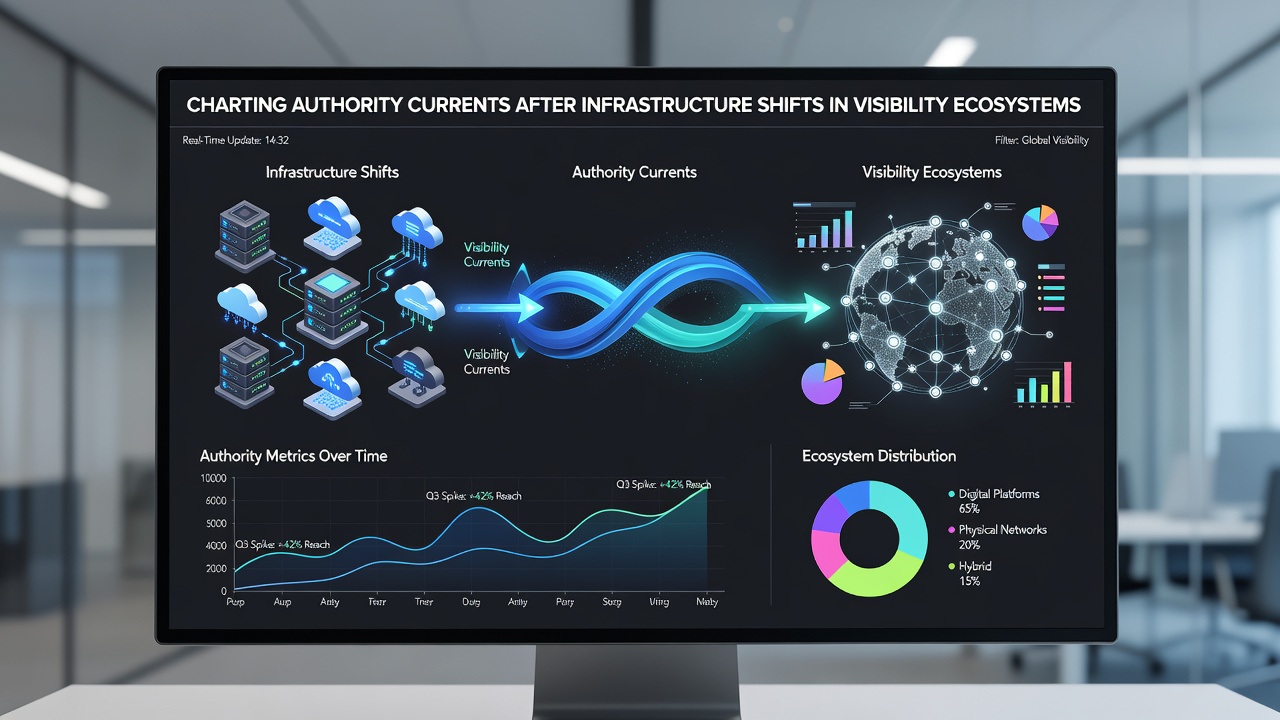
According to data released by the Australian Competition and Consumer Commission, platform operators who integrate multi-source authority verification systems gain clearer visibility into how external signals respond to internal infrastructure adjustments. Additional findings from European academic consortia highlight the value of cross-referencing server log data with ranking position histories to isolate infrastructure-driven effects from algorithmic policy changes.
Developments Anticipated for September 2026
Industry documentation outlines that several large-scale infrastructure modernization projects are slated for completion around September 2026, including expansions of distributed indexing clusters and refinements to real-time content synchronization protocols. Reports compiled by research institutions indicate these modifications may produce extended periods of authority current recalibration as systems rebalance trust signals across newly provisioned nodes. Observers have noted that preparatory steps such as pre-migration testing of crawl directives and authority preservation audits can mitigate abrupt disruptions during the transition window.
Figures released through collaborative studies involving Canadian research centers suggest that organizations conducting phased rollouts of infrastructure upgrades experience more predictable authority flow patterns than those implementing simultaneous changes across all production environments.
Case Observations from Recent Transitions
Analysts examining previous infrastructure events have identified cases where media distribution networks that upgraded their origin server configurations observed authority currents strengthening toward content published shortly after the updates stabilized. In contrast, platforms that encountered synchronization issues during similar shifts recorded temporary authority leakage to external aggregator sites. Data compiled across multiple sectors shows that recovery timelines for authority metrics vary according to the scale of the infrastructure change and the degree of preparatory coordination with indexing services.
Conclusion
Comprehensive tracking of authority currents after infrastructure shifts requires integrated approaches that combine technical monitoring with signal correlation techniques, and available evidence points to the continued evolution of these methods as new infrastructure layers emerge. Organizations that maintain systematic records of both infrastructure events and authority metric movements position themselves to anticipate redistribution patterns more effectively when future modifications take place.